
Fun and Engaging Learning Games for Kids at Home or School
At Semillas Preschool, we believe that learning games are not about keeping children busy or rushing academic skills. They are about creating meaningful experiences where curiosity, connection, and joy lead the learning. Whether at home or in the classroom, games become powerful tools when they respect children’s developmental stages and invite them to actively participate in their own learning.
Children learn best when they are engaged, emotionally secure, and free to explore. At Semillas, learning games are rooted in play, real-life experiences, and relationships. They are intentionally simple, open-ended, and adaptable to different environments, allowing children to grow confidently at their own pace.
In this blog post, we share five fun and engaging learning games that can be used both at home and at school. Each game includes two versions, one designed for family life and one for classroom settings, while maintaining the same learning goals. These activities support language development, motor skills, problem-solving, and social-emotional growth, all while honoring the joy of childhood.
Semillas’ Vision on Learning Games
At Semillas Preschool, learning games are not separate from daily life. They are woven into routines, conversations, and play. A game does not need to look academic to be meaningful. In fact, the most powerful learning often happens when children are deeply engaged in play that feels natural and enjoyable.
Our approach to learning games is guided by a few key principles:
- Children learn through play and hands-on experiences
- Games should be open-ended and adaptable
- Process matters more than outcomes
- Emotional safety and connection come first
- Learning should feel joyful, not pressured
The games below reflect this philosophy and can be easily adapted to different ages and environments.

1. Sorting and Matching Treasure Hunt
Learning Focus
Early math skills, categorization, language development, and attention
Home Version
Choose everyday objects from around the house, such as spoons, socks, buttons, or toy animals. Place them in a basket and invite your child to sort them by color, size, shape, or type. For younger children, start with just two categories. For older children, increase the challenge by adding more sorting rules.
This activity encourages children to observe similarities and differences while building early math and language skills. Naming categories together strengthens vocabulary and reasoning.
School Version
In a classroom setting, place a variety of materials on a rug or table, such as blocks, natural objects, or classroom supplies. Children can work individually or in small groups to sort the materials in different ways. Teachers may invite children to explain their choices or suggest new sorting ideas.
This collaborative version promotes social interaction, communication, and flexible thinking while reinforcing math concepts through play.
2. Story Builders
Learning Focus
Language development, creativity, memory, and social-emotional skills
- Highlight key faith themes throughout the year
- Create shared language and experiences across classrooms
- Invite children to pause, reflect, and connect
- Strengthen the link between school and family life
Home Version
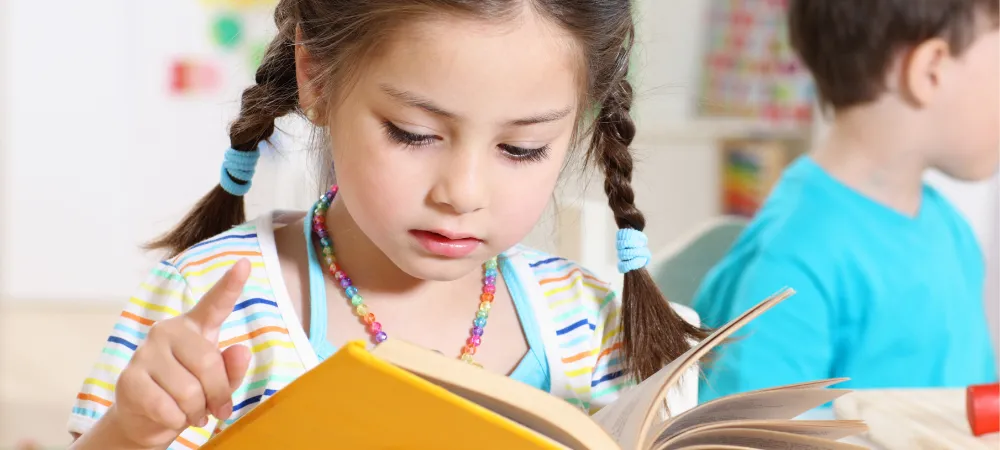
Gather a few familiar objects or picture cards and place them in a bag. Take turns pulling out one item at a time and adding a sentence to a shared story. The story can be silly, imaginative, or based on real-life experiences.
This game supports storytelling skills, expressive language, and confidence. Children learn that their ideas matter and that stories can grow through collaboration.
School Version
In the classroom, story building can be done as a group activity during circle time or in small groups. Children may use puppets, picture cards, or classroom objects to build a collective story. The teacher acts as a facilitator, helping children listen to one another and take turns.
This version strengthens group listening skills, narrative structure, and emotional expression, all while fostering a sense of community.
3. Movement and Action Game
Learning Focus
Gross motor development, self-regulation, listening skills, and coordination
Home Version
Create a simple movement game by calling out actions such as jump, crawl, spin, stretch, or balance. These movements can be connected to animals, emotions, or daily routines. Keep the pace flexible and responsive to your child’s energy.
Movement-based games help children release energy while developing body awareness and listening skills. They also support emotional regulation and focus.
Movement-based games help children release energy while developing body awareness and listening skills. They also support emotional regulation and focus.
School Version
In a school environment, this game can be played as a group during transitions or brain breaks. Children follow movement prompts together, sometimes taking turns choosing the next action. Music can be added to increase engagement.
This version builds group coordination, cooperation, and shared joy, helping children reset and refocus throughout the day.
This version builds group coordination, cooperation, and shared joy, helping children reset and refocus throughout the day.
4. Practical Life Challenge
Learning Focus
Independence, fine motor skills, responsibility, and confidence
Home Version
Invite children to participate in real-life tasks such as setting the table, folding small towels, watering plants, or organizing toys. Turn these moments into a game by framing them as a challenge or mission.
Practical life games build a strong sense of competence and belonging. Children feel proud when they contribute meaningfully to their home environment.
Practical life games build a strong sense of competence and belonging. Children feel proud when they contribute meaningfully to their home environment.
School Version
In the classroom, practical life challenges might include cleaning up learning areas, caring for classroom plants, or preparing materials for activities. Children may rotate roles or work together toward a shared goal.
This version supports responsibility, cooperation, and respect for the environment while reinforcing independence and self-esteem.
This version supports responsibility, cooperation, and respect for the environment while reinforcing independence and self-esteem.
5. Problem-Solving Builders
Learning Focus
Critical thinking, creativity, perseverance, and collaboration
Home Version
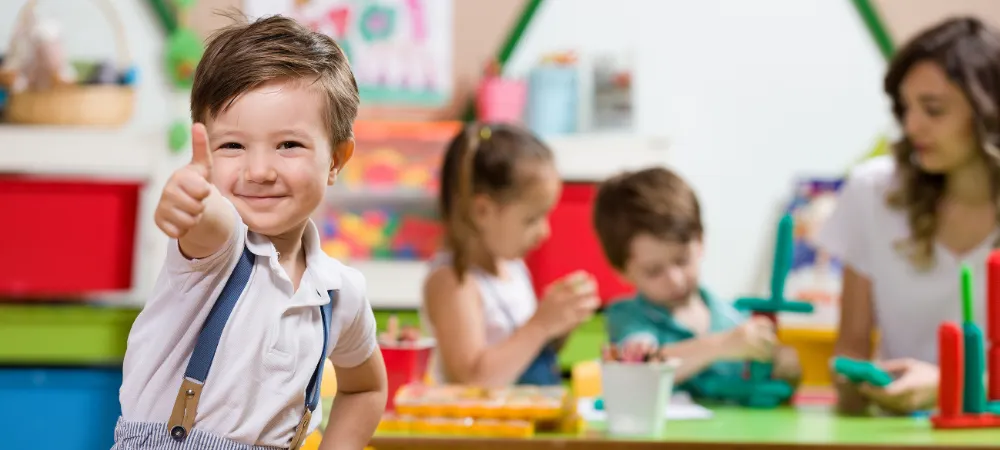
Offer open-ended building materials such as blocks, recycled boxes, or household items. Present a simple challenge, such as building a bridge for a toy or creating a tall structure that can stand on its own.
This activity encourages children to plan, test ideas, and problem-solve through trial and error. Adults support learning by observing and asking open-ended questions rather than giving solutions.
This activity encourages children to plan, test ideas, and problem-solve through trial and error. Adults support learning by observing and asking open-ended questions rather than giving solutions.
School Version
In a school setting, children can work in pairs or small groups to solve building challenges. Teachers may introduce themes connected to classroom topics or allow children to create freely.
This collaborative version strengthens communication, teamwork, and resilience while promoting creative thinking.
This collaborative version strengthens communication, teamwork, and resilience while promoting creative thinking.
Bringing Learning Games Into Everyday Life
At Semillas Preschool, we believe that learning does not need to be separated into academic moments. Games become most meaningful when they are part of everyday life, whether during a quiet afternoon at home or a lively morning at school.
When adults slow down and trust the learning process, children gain confidence in their abilities and develop a lifelong love of learning. Learning games should feel inviting, flexible, and joyful, not rushed or outcome-driven.
When adults slow down and trust the learning process, children gain confidence in their abilities and develop a lifelong love of learning. Learning games should feel inviting, flexible, and joyful, not rushed or outcome-driven.
A Final Thought from Semillas
Learning games are not about doing more, but about doing things with intention. At Semillas Preschool, we honor play as the foundation of learning and relationships as the heart of development.
By offering thoughtful, engaging games at home and at school, families and educators work together to support children’s growth in a way that feels natural and meaningful. When learning is rooted in joy, connection, and curiosity, children thrive, not only in school, but in life.
By offering thoughtful, engaging games at home and at school, families and educators work together to support children’s growth in a way that feels natural and meaningful. When learning is rooted in joy, connection, and curiosity, children thrive, not only in school, but in life.

